Alternative data points to measure the volatile state of the tech industry
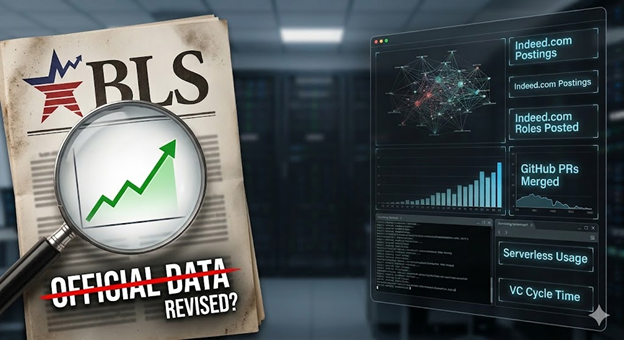
In a recent post I did on the volatile state of the software development industry, I had an excellent series of comments by Mitchell Mason, so I figured I would share them with you all.
It’s an interesting data point that I’ll see referenced from time-to-time. I’ll point out what others do: that measuring the volume of roles posted to Indeed is probably not a super-accurate reflection of the state of hiring (although certainly not a useless one). It can be influenced by jobs posted for reasons other than hiring (ghost jobs that make the company look better), and doesn’t consider other hiring platforms or direct referral hires. It’s very much a quick-reference pulse-check.

I think the bigger gap is that it only measures the volume of software development jobs, but it can’t say anything about what level of experience is being asked. The biggest demographic that’s been struggling since the highs of 2022 is junior developers (especially new grads).
I went on to ask them what data points they recommend, to which they responded with the following:
I mostly reference BLS data, although that’s pretty rosy by comparison. All the same, there are a lot of different angles you can look at, as opposed to just this one trend line.
For those of you who had to Google “ BLS data” because your morning caffeine had not quite kicked in yet, as I did, it’s the US Bureau Of Labor Statistics.
I’m actually familiar with it, and it's my understanding that, as he pointed out, the data in the BLS is “rosy” and often is published high, then a few months later revised down.
They do have pages dedicated to Software Engineering that indeed paint a “rosy” picture that I am not sure is currently reflected in the market, but is still worth a look.
With that all said, let me ask you, where do you go looking for data on the industry?
Are there any data points you think are worth diving deeper into?